OneThe Four Problems Wet Trails Create
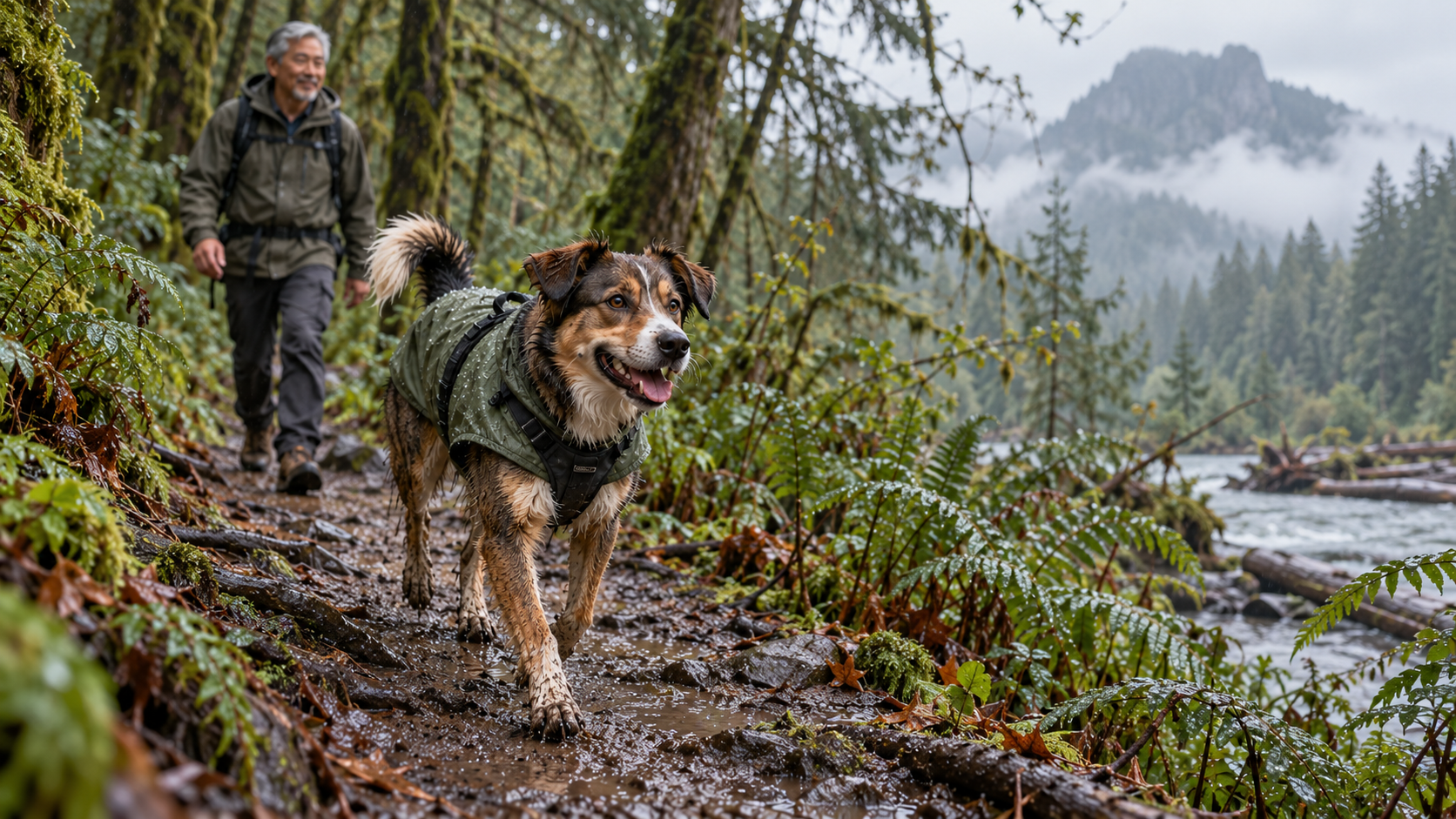
A rainy PNW hike is not just a dry hike with water added. Wet weather changes what your dog is up against, and almost everything you might reach for solves one of four specific problems. Name the problem first, and it gets a lot easier to decide what — if anything — you actually need.
- Staying dry. A soaked coat pulls heat away fast, especially on a thin-coated dog standing still at a viewpoint in a cold wind. Some dogs run warm and shrug off a drizzle; others start to shiver within the hour.
- Paw traction and protection. Wet roots, slick rock, and greasy mud take away grip, and cold grit works its way between the pads. Traction is a footing problem; protection is a skin-and-pad problem. They overlap, but they are not the same.
- Water on the trail. Ironically, a dog can get dehydrated on a wet hike. Puddles and slow, standing water can carry things you would rather your dog not drink, so bringing your own is still the simple answer.
- Not bringing the mud home. The hike ends at the trailhead, but the mess does not. A soaked, muddy dog and a clean car do not coexist without a plan.
Work down that list honestly for the dog in front of you, and you will usually find you need less than the internet wants to sell you. The next four sections take the problems one at a time, with the one piece of gear we actually reach for — and, just as important, when you can skip it.
The system just changes.”
TwoStaying Dry: The Rain Shell
The first problem is heat loss. A dog coat is not a rain jacket; once it is soaked through, it stops insulating and starts wicking warmth away, and a wet dog in a cold Cascade wind can get uncomfortable faster than you would expect. A fitted rain shell keeps the core and back dry so the dog stays comfortable enough to keep moving and enjoy the outing rather than just endure it.
This is the most dog-dependent item on the list. A thick, double-coated breed built for weather may not want a shell at all, and forcing one on a dog that runs hot can do more harm than good. Short-coated dogs, seniors, small dogs, and anyone who tends to shiver at a rest stop are the ones who benefit most. Fit matters more than the label: a shell should cover the back and chest without rubbing the armpits or restricting the shoulders, and your dog should still move naturally in it. If in doubt, watch your dog, not the forecast.
As an Amazon Associate I earn from qualifying purchases. Read our affiliate disclosure.
Ruffwear Sun Shower Dog Raincoat
A packable, waterproof shell that keeps the back and core dry on a steady PNW drizzle. Worth considering for thin-coated dogs and cold-weather standers; easy to skip for a dog that runs warm. Check the size chart and the fit around the chest and legs before your first real hike in it.
See the raincoat we carryThreePaw Traction & Protection
Wet season is hard on feet. Slick roots and rock take away grip on the descents, cold grit and grime lodge between the pads, and repeated soakings can leave pads raw or chapped the way our own hands get in winter. There are two different tools here for two related jobs: boots for traction and a physical barrier, and a pad balm for conditioning the skin.
Boots, When The Footing Turns
Boots earn their place on rough, rocky, or icy trail and for dogs that keep splitting a pad. A rugged sole gives real grip on greasy rock, and a closed boot keeps sharp grit and cold slush out. That said, boots are not a default. Plenty of dogs do their best work barefoot in the mud, and a boot that fits badly is worse than none at all — it can rub or twist. Introduce them at home first, get the sizing right, and let your dog tell you whether they help.
Ruffwear Grip Trex Dog Boots
A rugged-soled boot for traction on wet rock and protection from cold grit on rough trail. Most useful on technical or icy terrain, or for a dog prone to pad splits. Measure each paw and size carefully, and give your dog time to get used to them before a long day out.
See the boots we carryA Balm For The Pads
For dogs that do fine barefoot, a pad balm is the lighter-touch option. A swipe before the hike gives the pads a little conditioning, and a swipe after helps with the dry, chapped look that repeated soakings can leave behind. It lives in the glovebox, weighs nothing, and pairs well with the post-hike paw check below. If your dog has a genuine pad injury, cracking, or a persistent limp, that is a conversation for your veterinarian rather than a balm.
Musher’s Secret Paw Balm
A wax-based balm for conditioning pads before and after wet, gritty hikes. A sensible companion to the post-trail paw check for dogs that skip boots. Not a treatment for injuries — if a pad is cut, cracked, or sore, check with your vet.
See the paw balm we carryFourWater On The Trail
It sounds backward to talk about hydration on a soggy hike, but a working dog still loses water through panting no matter how gray the sky is, and the puddles and slow, standing water along a rainy trail are exactly what you do not want your dog drinking from. The simple fix is the one we have carried for years: bring your own, and offer it at regular stops rather than waiting for your dog to look thirsty.
A packable bowl makes that easy. The good ones fold flat, weigh almost nothing, shed water instead of soaking it up, and open in a second when you stop under a dripping cedar for a break. This is close to universal — nearly every dog on nearly every hike benefits from clean water on a schedule — and it is the habit, not the object, that matters. Any durable collapsible bowl you will actually carry beats the fanciest one left in a drawer.
Ruffwear Trail Runner Collapsible Dog Bowl
A flat-folding, coated-fabric bowl that packs into its own pocket and shrugs off the wet. It makes the shaded water break effortless, which is the whole point — the easier it is to offer water, the more often you will. Rinse and air it out after muddy days.
See the trail bowl we carryFiveNot Bringing The Mud Home
The last problem starts the moment you reach the trailhead. A dog who has had a wonderful, filthy morning is now standing between you and a clean car, and nobody enjoys the wrestling match that follows. A little cleanup ritual at the tailgate solves it and doubles as a health check. The tool most of us reach for is a paw cleaner — a cup you add a bit of water to, then dip and twist each paw so the soft bristles work the mud out from between the pads.
Keep it in the trunk with an old towel and it becomes automatic: cup, dip, twist, towel, done. It is a convenience, not a necessity — a bucket of water and a rag do the same job — but it is a tidy one, and the paw-by-paw handling is a natural moment to run the post-trail check. Introduce it gently with a dog that is unsure about having its feet handled.
Dexas MudBuster Portable Dog Paw Cleaner
A soft-bristled cup that cleans caked mud out from between the pads with a little water and a twist. Handy for keeping the car and the house sane after a wet hike, and a good excuse to check each paw. Rinse it out and let it dry between trips.
See the paw cleaner we carry